How to map workflows before you build AI agents
A practical workflow-mapping method for production agents: steps, tools, failure cost, and where humans stay in control.
Written by Dali
Dali is an AI agent systems studio. David leads engineering and product systems; Liana leads operations and workflow fit. We ship production agents inside tools teams already use.
David Hakobyan · LinkedIn · Dali
Direct answer
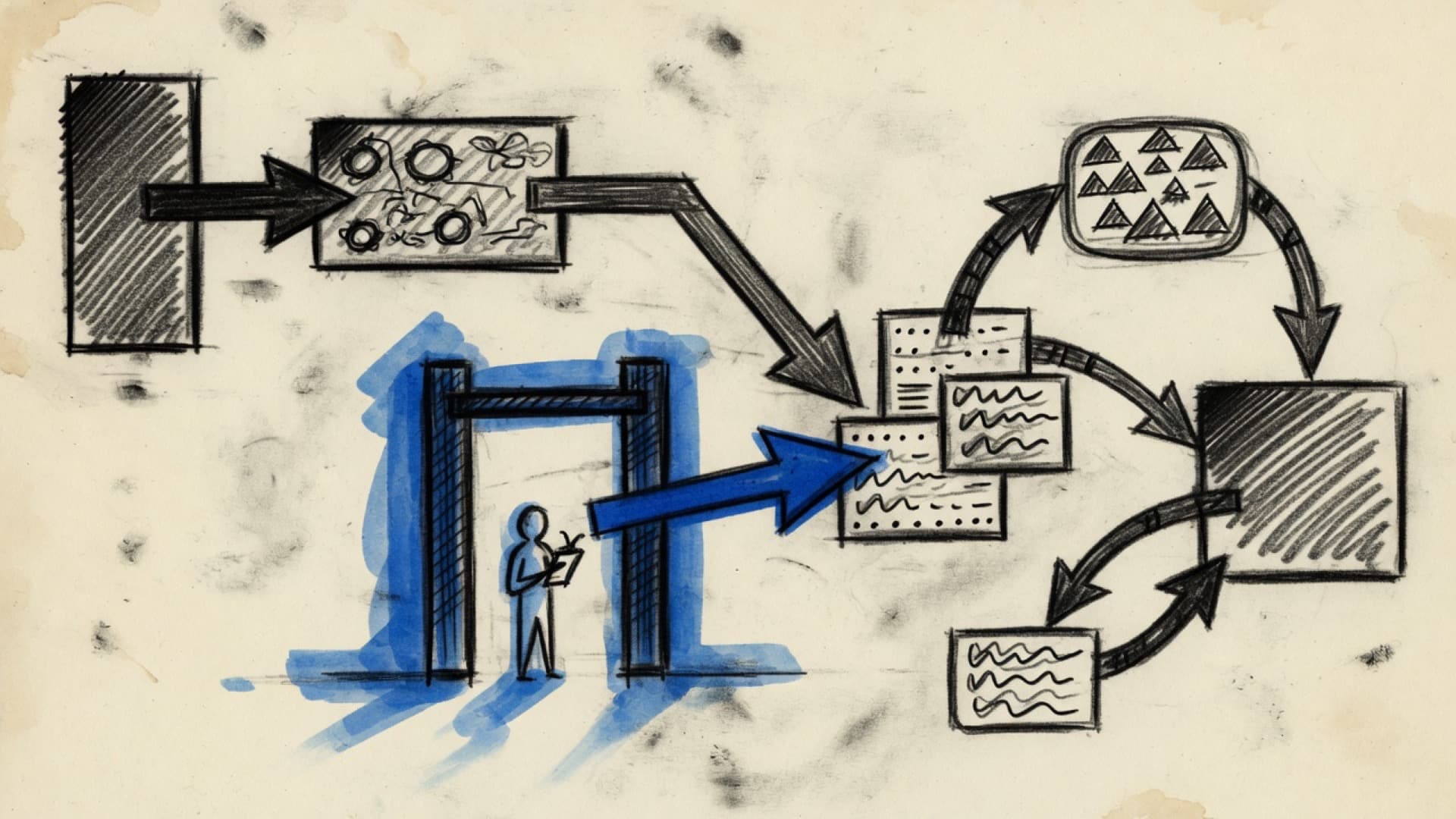
Map the real workflow before you write prompts or wire tools. A useful map names every step, the tool it lives in, who owns it today, what "done" means, and the cost if that step fails. Without that map, agents automate myths.
Why mapping comes first
Teams often start with a model or a chatbot UI. Production agents start with work: intake, triage, draft, approve, send, log. If those steps are fuzzy, the agent will be fuzzy too.
A minimal mapping session (half day)
- Pick one high-volume workflow (not ten).
- Walk a real recent case end to end - not the happy path slide.
- Capture for each step: actor, tool, inputs, outputs, exceptions.
- Mark irreversible actions (send, pay, change permissions, public post).
- Score failure cost: low / medium / high for customer, money, trust.
- Decide which steps an agent may draft, execute, or never touch.
Template fields (copy this)
| Field | Example |
|---|---|
| Step name | Qualify inbound lead |
| Tool | Gmail + CRM |
| Owner today | AE |
| Inputs | email body, form fields |
| Output | stage update + draft reply |
| Irreversible? | send reply = yes |
| Failure cost | medium (bad first impression) |
| Agent role | draft only |
Common mapping failures
- Mapping the org chart instead of the work
- Skipping exceptions ("VIP clients", "legal holds")
- Assuming one tool when work hops across five
- Forgetting the human who currently holds judgment
After the map
Only then choose agent scope: one production path, clear gates, and a two-to-four week measurement window (cycle time, error rate, rework). See also human approval gates.
How Dali runs discovery
Dali starts with process discovery inside tools the team already uses, then designs agent paths with approval boundaries. Start from solutions.
FAQ
No. One high-volume workflow mapped deeply beats a portfolio of vague process diagrams.